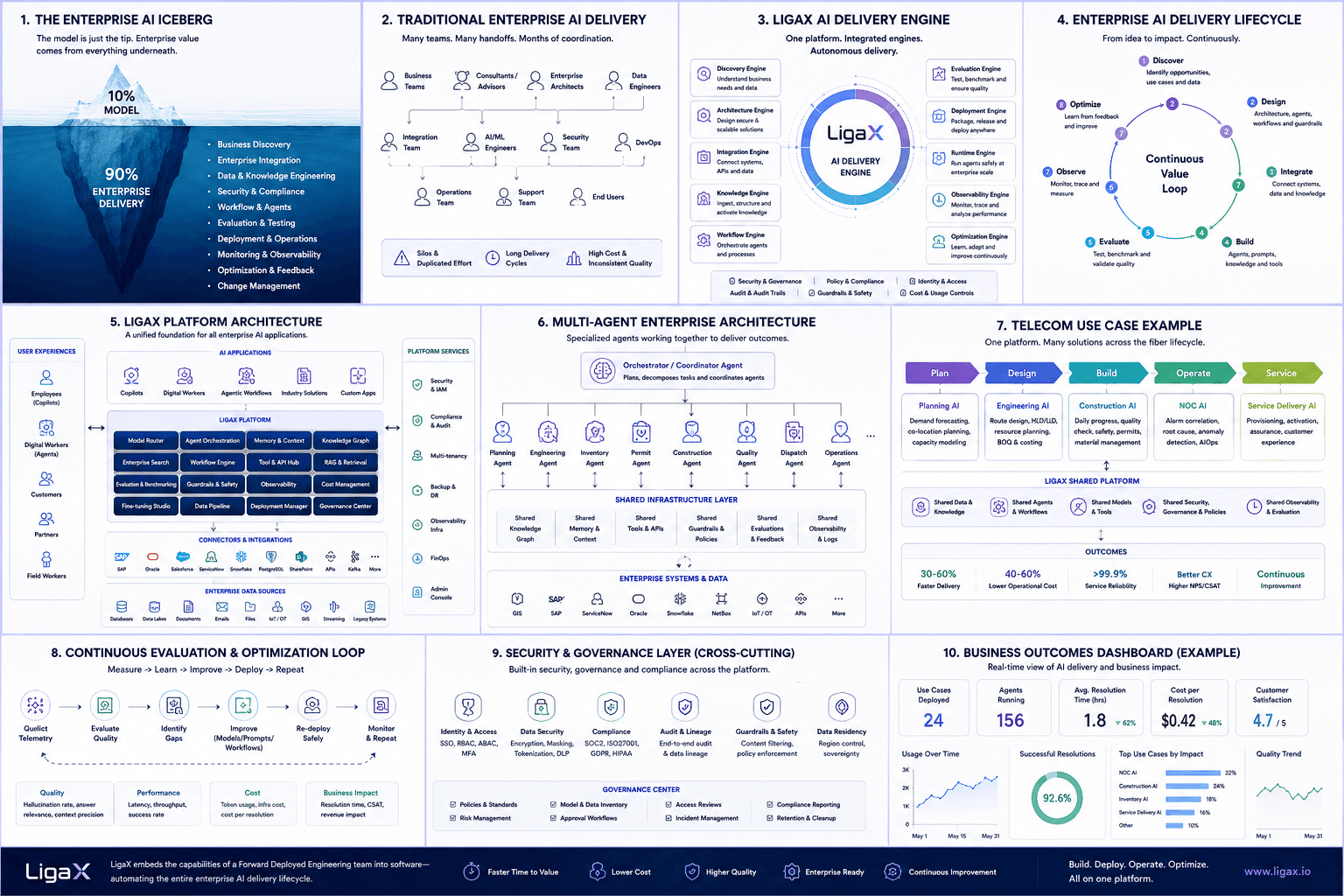

At Ligaments.AI, we're solving one of the most critical challenges facing enterprises today: how to effectively deploy and scale AI solutions across complex organizational landscapes. While the promise of AI is clear, the reality of implementation—navigating fragmented systems, ensuring data quality, maintaining governance, and delivering measurable ROI—remains a significant hurdle for most organizations.
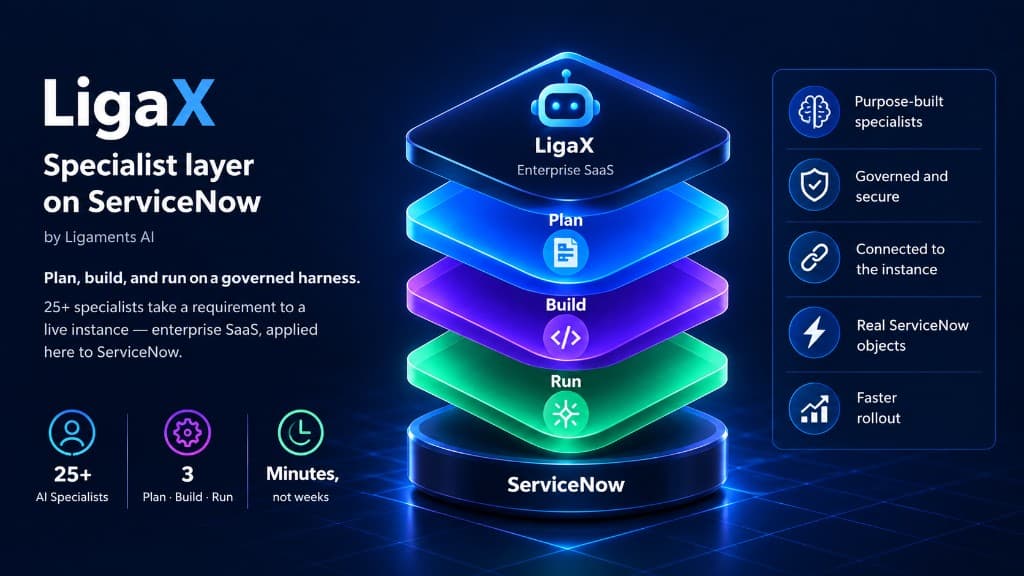
Our answer is LigaX: an "AI that builds AI" platform designed to democratize enterprise AI deployment while maintaining the rigor and reliability that mission-critical systems demand.
The LigaX Philosophy: Production-Ready from Day One
 The LigaX Philosophy: Production-Ready from Day One
Traditional AI development follows a familiar pattern: proof-of-concept, pilot, production. The problem? Most projects never make it past the pilot stage. They fail not because the AI doesn't work, but because the surrounding infrastructure—data pipelines, integration layers, monitoring systems, governance frameworks—isn't production-ready.
LigaX takes a different approach. Every component we build is designed with production deployment in mind from the first line of code:
- Enterprise-grade architecture with comprehensive error handling and logging
- Scalable data pipelines that handle real-world data volumes and complexity
- Built-in observability for monitoring, debugging, and optimization
- Comprehensive documentation that enables seamless handoffs and maintenance
- Measurable outcomes tied directly to business KPIs
Core Capabilities: What We Build
1. Advanced RAG Systems for Domain-Specific Applications
 1. Advanced RAG Systems for Domain-Specific Applications
Retrieval-Augmented Generation represents the intersection of traditional enterprise knowledge management and modern generative AI. Our RAG implementations go beyond basic document retrieval to handle complex, structured enterprise data.
Recent Implementation: Design Management
For Liga AI's Product design platform, we built a sophisticated RAG system that processes over 6,000 technical documents, including:
- Complex entity relationships (IP blocks, SoC designs, verification components)
- Multi-dimensional attributes (specifications, dependencies, compliance requirements)
- Heterogeneous data sources (Excel files, technical specs, design documentation)
Key innovation: Our chunking approach maintains semantic coherence across complex technical hierarchies, ensuring that searches return contextually complete information rather than fragmented snippets.
2. Agentic AI Frameworks
 2. Agentic AI Frameworks
We've moved beyond simple chatbots to build truly agentic systems that can plan, execute, and adapt to complex enterprise workflows.
Network Operations Automation
Our telecommunications solutions include:
- Autonomous fault detection and diagnosis across multi-vendor environments
- SNMP protocol monitoring and analysis
- BGP optimization and routing intelligence
- Real-time infrastructure performance management
These agents don't just respond to queries—they proactively monitor, analyze, and recommend actions based on comprehensive training on real-world operational scenarios.
3. Domain-Specific Model Development and Fine-Tuning
 3. Domain-Specific Model Development and Fine-Tuning
While large general-purpose models are powerful, we've found that domain-specific fine-tuned models often deliver superior performance at a fraction of the cost for specialized enterprise tasks.
Our Fine-Tuning Portfolio
We've developed and deployed custom models across multiple industries using state-of-the-art small language models (SLMs):
- Healthcare
- Telecommunications
- Manufacturing
- Banking & Financial Services
Our Fine-Tuning Methodology
-
Data Curation
- Domain expert collaboration for high-quality training data
- Synthetic data generation for rare scenarios
- Careful balancing of positive and negative examples
- Multi-stage quality filtering and validation
-
Training Approach
- Supervised Fine-Tuning (SFT): Initial adaptation to domain-specific tasks
- Reinforcement Learning from Human Feedback (RLHF): Alignment with expert preferences and safety requirements
- Reinforcement Learning with Verifiable Rewards (RLVR): Emerging technique we're pioneering for tasks with objective correctness metrics (code generation, structured output, mathematical reasoning)
-
Optimization Techniques
- LoRA (Low-Rank Adaptation) for parameter-efficient fine-tuning
- Quantization (4-bit, 8-bit) for deployment efficiency
- Knowledge distillation from larger models
- Multi-task learning for related capabilities
-
Evaluation Framework
- Task-specific accuracy metrics
- Human preference evaluations
- Latency and throughput benchmarking
- Cost analysis (training + inference)
- A/B testing in production environments
Why Fine-Tuned SLMs?
The economics are compelling:
- 10-100x cost reduction compared to large proprietary models
- 5-10x lower latency enabling real-time applications
- Data privacy: Models can be deployed on-premise
- Customization: Behavior tailored precisely to enterprise requirements
- Specialization: Often outperform general models on domain-specific tasks
Real-World Impact
Our telecommunications client deployed a fine-tuned Gemma 2-9B model for network fault diagnosis:
- 94% accuracy on fault categorization (vs. 78% with GPT-4)
- $0.0001 per query (vs. $0.03 with GPT-4)
- 150ms average latency (vs. 2-3 seconds)
- On-premise deployment meeting strict data residency requirements
- ROI achieved in 6 weeks from cost savings alone
4. Model Recommendation and Orchestration
 4. Model Recommendation and Orchestration
Not every problem needs the largest, most expensive model. Our model recommendation engine analyzes use cases, data characteristics, latency requirements, and cost constraints to suggest optimal model choices from our supported ecosystem:
- OpenAI (GPT-4, GPT-3.5)
- Anthropic (Claude family)
- Google (Gemini Pro, Gemini Flash)
- Open-source alternatives (Llama, Mistral)
The system provides detailed ROI analysis, including:
- Cost per transaction projections
- Latency benchmarks
- Accuracy trade-offs
- Integration complexity assessments
Industry-Specific Solutions
 Industry-Specific Solutions
Telecommunications
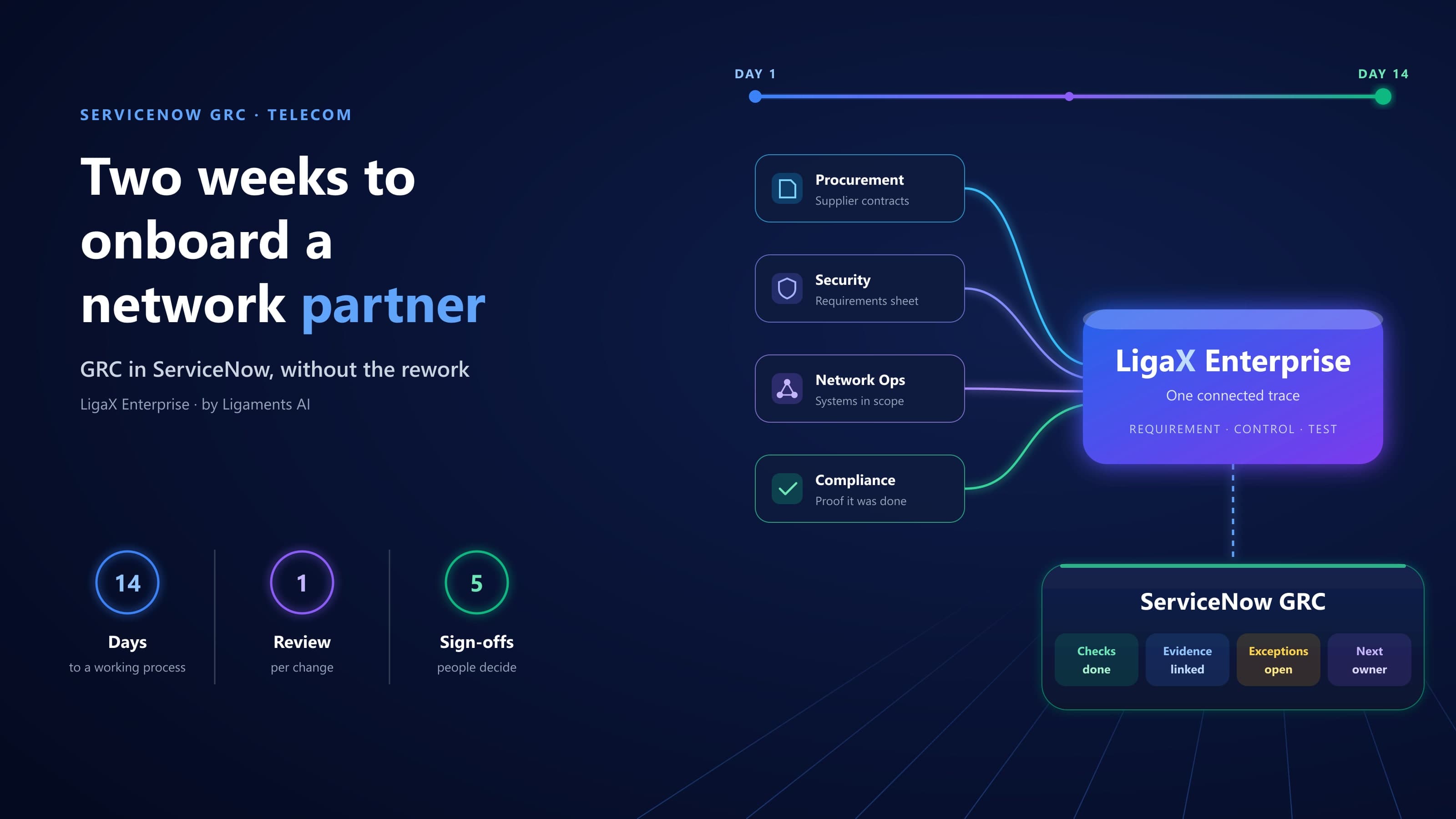
- ServiceNow TNI implementations with POD-based delivery models
- Network inventory management and migration (MetaSolv to ServiceNow)
- Automated provisioning and configuration management
- Comprehensive fault management systems
Healthcare
- Medical diagnostic support systems (diagnostic reasoning, treatment protocols)
- Clinical documentation automation
- Patient data integration and analysis
Financial Services
- Automated tax filing systems (ITR-6 for Indian companies)
- Regulatory compliance automation
- Risk assessment and monitoring
Technical Architecture Principles
 Technical Architecture Principles
1. Data-First Design
 1. Data-First Design
AI quality is fundamentally limited by data quality. We invest heavily in data pipeline engineering:
Raw Data → Validation → Transformation → Enrichment → Storage → Retrieval
Each stage includes comprehensive error handling, data quality checks, and observability hooks.
2. Modular, Composable Components
 2. Modular, Composable Components
LigaX is built on a microservices architecture where each component:
- Operates independently with well-defined inputs and outputs
- Scales horizontally as needed
- Fails gracefully without cascading failures
- Integrates seamlessly with existing enterprise systems
3. Comprehensive Observability
Every AI interaction generates telemetry:
- Request/response logging
- Latency metrics
- Token usage and cost tracking
- Error rates and failure modes
- User satisfaction signals
This data feeds back into continuous improvement cycles.
4. Security and Governance
 4. Security and Governance
Enterprise AI requires enterprise security:
- Role-based access control (RBAC)
- Data encryption at rest and in transit
- Audit logging for compliance
- PII detection and redaction
- Model output filtering and safety guardrails
The Composable Architecture Advantage
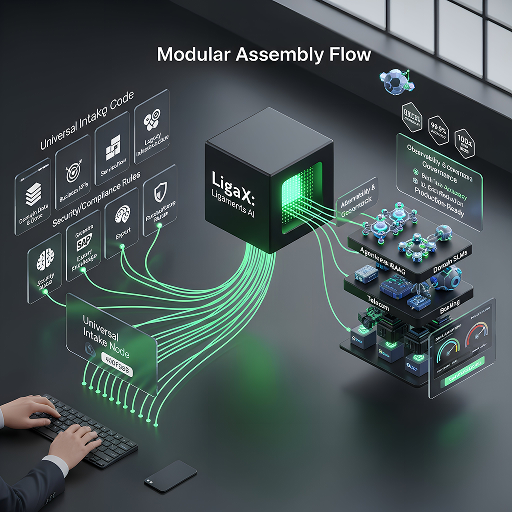
At the heart of LigaX is a composable architecture philosophy—the idea that complex AI systems should be built from independently functional, reusable components that can be assembled in different configurations to meet diverse business needs.
What is Composable Architecture?
Think of it as "LEGO blocks for enterprise AI." Each component:
- Operates independently with well-defined inputs and outputs
- Communicates via standard protocols (REST APIs, event streams, message queues)
- Maintains its own state without tight coupling to other components
- Scales independently based on demand
- Can be replaced or upgraded without system-wide disruption
Core Components of Our Composable Stack
-
Data Ingestion Layer
- Connectors for 50+ enterprise systems (ServiceNow, SAP, Salesforce, legacy databases)
- Real-time and batch processing pipelines
- Automatic schema detection and validation
- Data quality scoring and alerting
-
Processing Engine
- ETL/ELT transformations
- Data enrichment and normalization
- Entity resolution and deduplication
- Relationship mapping and graph construction
-
AI Model Layer
- Multi-vendor model orchestration
- Automatic model selection based on task requirements
- Prompt template management and versioning
- Context window optimization
-
Vector Storage & Retrieval
- Pluggable vector database support (Pinecone, Weaviate, Chroma, FAISS)
- Hybrid search (semantic + keyword)
- Dynamic embedding model selection
- Efficient chunking and indexing strategies
-
Agent Framework
- Tool calling and function execution
- Multi-agent collaboration protocols
- Memory management (short-term, long-term, semantic)
- Decision logging and explanation
-
Integration Layer
- RESTful API gateway
- Webhook management
- Event-driven workflows
- Real-time and batch sync capabilities
-
Observability Stack
- Comprehensive logging and tracing
- Performance metrics and dashboards
- Cost tracking and optimization alerts
- User interaction analytics
Why Composability Matters for Enterprise AI
- Flexibility: Swap out a vector database, change embedding models, or add new data sources without rewriting the entire system.
- Cost Optimization: Scale expensive components (like LLM inference) independently from cheaper ones (like data preprocessing).
- Risk Mitigation: Test new components in isolation before rolling them into production.
- Vendor Independence: Avoid lock-in by abstracting vendor-specific implementations behind standard interfaces.
- Faster Time-to-Market: Reuse proven components across multiple use cases and clients.
Building for Composition: Design Principles
- Interface-First Design: Define clear contracts before implementation
- Stateless Where Possible: Minimize shared state to enable horizontal scaling
- Configuration Over Code: Use declarative configs for component assembly
- Comprehensive Testing: Each component has unit, integration, and performance tests
- Version Management: All components are versioned and backward-compatible
- Documentation as Code: Auto-generated API docs from interface definitions
This composable approach has become our competitive advantage—enabling us to deliver production-ready solutions in weeks rather than months.
Measuring Success: Beyond Accuracy Metrics
We believe in ROI-driven AI development. Every solution includes clear success metrics:
Efficiency Gains
- Reduction in manual processing time
- Automation of repetitive tasks
- Faster time-to-insight
Quality Improvements
- Error reduction rates
- Consistency in decision-making
- Compliance adherence
Business Impact
- Cost savings (quantified)
- Revenue enablement
- Customer satisfaction improvements
- Risk mitigation
Real-World Impact: Case Studies in Brief
 Real-World Impact: Case Studies in Brief
ServiceNow Telecommunications Implementation
- Challenge: Major telecom provider needed to migrate legacy systems to ServiceNow
- Solution: AI augmented automated data migration and validation
- Result: 40% reduction in implementation time, 99.9% data accuracy
Network Fault Detection System
- Challenge: Multi-vendor network environment with high MTTR
- Solution: AI-powered autonomous monitoring and diagnosis
- Result: 60% reduction in mean-time-to-resolution, 80% fewer escalations
RAG-Based Knowledge Management
- Challenge: Product design team couldn't efficiently search technical documentation
- Solution: Semantic search across 6,000+ documents with context-aware retrieval
- Result: 75% reduction in information retrieval time, improved design quality
Domain-Specific Model Deployment - Telecommunications
- Challenge: Telecom provider processing 500K+ network fault tickets monthly with high misclassification rates
- Solution: Fine-tuned Gemma 2-9B model using RLHF with network operations experts
- Result: 94% fault categorization accuracy, 100x cost reduction ($15K/month to $150/month), 150ms latency, on-premise deployment meeting compliance requirements
Healthcare Clinical Documentation
- Challenge: Hospital system needed to extract structured data from unstructured clinical notes at scale
- Solution: Fine-tuned Llama 3.1-8B for medical entity recognition and ICD-10 coding
- Result: 92% coding accuracy, 80% reduction in manual review time, HIPAA-compliant on-premise deployment, $200K annual savings
The Technology Stack
 The Technology Stack
Our platform leverages best-in-class technologies:
Core AI/ML
- Large Language Models: OpenAI (GPT-4, GPT-3.5), Anthropic (Claude 3.5), Google (Gemini Pro/Flash)
- Small Language Models: Meta Llama 3/3.1 (8B-70B), Google Gemma 2 (9B-27B), NVIDIA Nemotron-4, Microsoft Phi-3/3.5, Alibaba Qwen2/2.5
- Fine-Tuning Frameworks: HuggingFace PEFT, Axolotl, LLaMA-Factory, TRL (Transformer Reinforcement Learning)
- Training Techniques: LoRA, QLoRA, RLHF, DPO (Direct Preference Optimization), RLVR
Data Infrastructure
- CouchDB for document storage
- PostgreSQL for relational data
- Redis for caching and session management
- Apache Kafka for event streaming
Integration Layer
- RESTful APIs with comprehensive documentation
- Webhook support for event-driven workflows
- Enterprise system connectors (ServiceNow, SAP, Salesforce)
Deployment & Operations
- Docker containerization
- Kubernetes orchestration
- Comprehensive monitoring (Prometheus, Grafana)
- CI/CD pipelines for automated testing and deployment
Looking Forward: The Future of Enterprise AI
As we continue to evolve LigaX, several trends guide our development:
-
Multi-Modal AI Integration Beyond text, we're incorporating vision, speech, and structured data analysis into unified workflows.
-
Autonomous Agent Ecosystems Moving from single-purpose agents to collaborative agent networks that handle complex, multi-step business processes.
-
Real-Time Adaptation AI systems that continuously learn from user interactions and outcomes, improving without manual retraining.
-
Explainable AI Making AI decisions transparent and auditable, critical for regulated industries and high-stakes decisions.
-
Edge AI Deployment Bringing AI capabilities closer to data sources for reduced latency and improved privacy.
 Multi-Modal AI Integration
Beyond text, we're incorporating vision, speech, and structured data analysis into unified workflows.
Multi-Modal AI Integration
Beyond text, we're incorporating vision, speech, and structured data analysis into unified workflows. Real-Time Adaptation
AI systems that continuously learn from user interactions and outcomes, improving without manual retraining.
Real-Time Adaptation
AI systems that continuously learn from user interactions and outcomes, improving without manual retraining. Explainable AI
Making AI decisions transparent and auditable, critical for regulated industries and high-stakes decisions.
Explainable AI
Making AI decisions transparent and auditable, critical for regulated industries and high-stakes decisions.Why Ligaments.AI?
The name "Ligaments" reflects our core mission: connecting the various components of enterprise AI—data, models, infrastructure, applications—into a cohesive, functioning system. Just as biological ligaments provide both strength and flexibility, our platform provides the robust connectivity enterprises need while maintaining the flexibility to adapt to unique requirements.