

Client Overview
A leading product vendor providing end-to-end loan management solutions for several top banks in India.
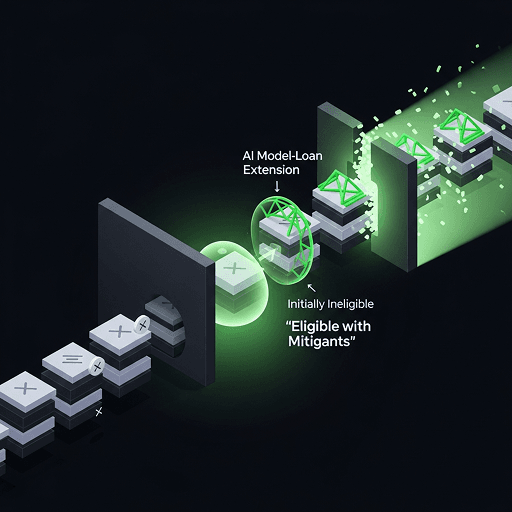
The client supports large-scale loan origination and servicing operations across Home, Personal, and MSME segments. As competition intensified and borrower profiles became more diverse, their static rule-based lending framework struggled to keep pace with evolving credit patterns, alternate data signals, and risk behaviours.
The Challenge
The client's lending teams relied heavily on static, manually created eligibility rules that did not capture the full complexity of borrower behaviour. Key challenges included:
- Static rule definitions based only on known eligibility criteria, leading to oversimplified underwriting
- Loss of valid borrowers, as unconventional yet creditworthy profiles were often rejected
- Underwriting decisions tied to analyst expertise, resulting in inconsistency and variability
- No simulation framework to understand how new rules would impact approvals or portfolio risk
- Lower approval rates and missed opportunities, especially in emerging and thin-file customer segments
These limitations reduced approval percentages, slowed loan product innovation, and restricted the ability to respond quickly to market demands.
Our AI Solution
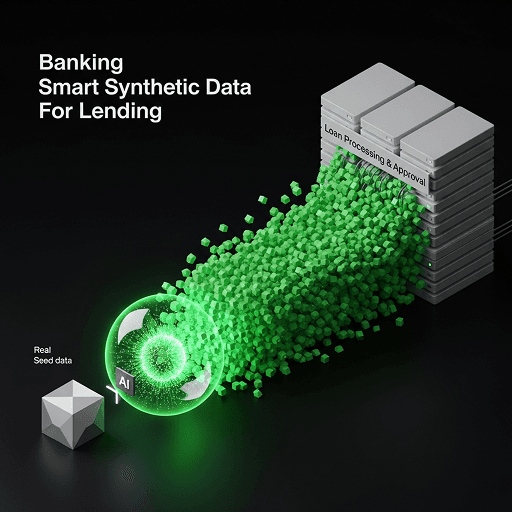
To modernize loan policy design and make rule creation data-driven, we deployed an AI-powered rules recommendation engine that learns from the client's historical lending performance and continuously suggests optimized eligibility and risk rules across loan products.
This comprehensive solution included:
1. Historical Pattern Analysis
AI models analyzed past approval, decline, delinquency, and repayment trends across multiple customer cohorts.
2. Risk Variable Discovery
The engine identified the strongest predictive factors—bureau trends, income surrogates, behavioural signals, thresholds, and cut-offs driving risk outcomes.
3. Rule Generation for Multiple Products
Optimized rule sets were generated for Home, Personal, and MSME loan portfolios based on product-specific risk-return dynamics.
4. Behaviour & Bureau Intelligence
The system examined income proxies, credit utilization, enquiry patterns, vintage, and repayment behaviour to uncover new eligibility pathways.
5. Rule Simulation & Portfolio Impact Estimation
Before deployment, each recommended rule was tested through simulations to estimate its effect on:
- Approval rates
- Expected loss
- Risk distribution
- Overall portfolio performance
6. Standardized Rule Library
A reusable library of data-backed rules was delivered to accelerate new product launches, ensure consistency, and reduce dependency on manual expertise.
This AI-enhanced framework helped the client transition from static policy definition to dynamic, data-driven rule design, enabling more informed lending decisions.
Impact & Key Results
With the AI-driven rule recommendation platform in place, the client observed significant improvements:
- Approval Lift: +6-12% Incremental Approvals — Gained new creditworthy customers without increasing expected portfolio loss.
- Improved Risk Quality — Rules optimized using historical loss patterns reduced DPD30/60 and strengthened overall credit quality.
- Faster Loan Product Launches — Rule definition cycles dropped from 3-4 weeks to 1 week or less, accelerating time-to-market.
- Reduced Manual Effort — 40% reduction in underwriting workload through automated, pre-recommended rules and fewer "Refer" cases.
- Data-Driven Decisioning — Rules now powered by portfolio behaviour, bureau intelligence, and alternate data signals—enabling smarter, consistent approvals.
- Governance & Explainability — Every rule included a clear rationale explaining why it was recommended, supporting compliance, auditability, and transparency.
Ready to Modernize Your Lending Decisions?
Discover how AI-driven rule recommendations can unlock new approval segments, strengthen credit quality, and accelerate product innovation.
Connect with us to explore how AI can elevate your LOS strategy.